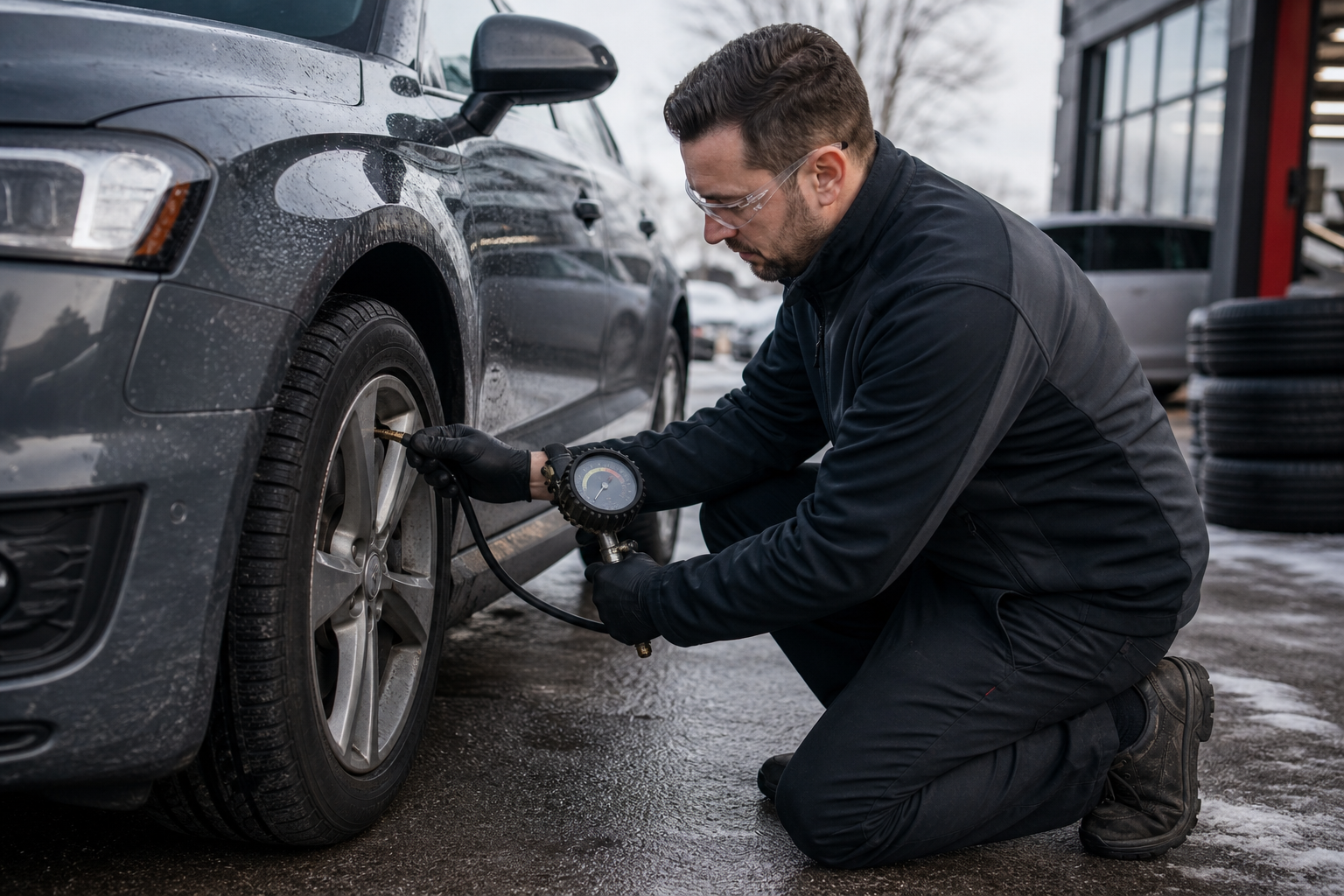
Understanding Tire Pressure in Cold Weather
As temperatures drop, many drivers in Ontario and the GTA notice their tire pressure monitoring system (TPMS) light turning on. This is a common occurrence each fall, and understanding why it happens can help you maintain your vehicle's safety.
Why Does the Tire Pressure Light Come On?
When temperatures decrease, the air inside your tires contracts. For every 5-degree Celsius drop, your tire pressure can decrease by approximately 1 PSI. This can often trigger the TPMS light on your dashboard during the first cold morning of the season.
How Much Pressure Do Tires Lose in Winter?
In winter, it's normal for your tires to lose pressure as the temperature drops. This loss can range from 3 to 5 PSI as the weather gets colder. It's crucial to check your tire pressure regularly and adjust as needed.
When Does the TPMS Light Indicate a Real Leak?
If your TPMS light remains on after adjusting the tire pressure, or if it activates frequently, it may signal a real leak. In such cases, it's essential to inspect your tires for punctures or damage. Consider booking an appointment for a professional evaluation.
Should You Overinflate Your Tires in Winter?
While it might be tempting to overinflate your tires to compensate for pressure loss, it's not recommended. Overinflating can lead to reduced traction and uneven wear. Instead, check and maintain your tire pressure according to the manufacturer's specifications.
Keep Your Tires in Top Shape
To ensure your tires are ready for the season, consider a seasonal tire change or visit one of Limitless Tire's branches in North York, Brampton, Mississauga, Pickering, Burlington, or Kingston. For more information on tire pressure monitoring systems, visit our TPMS page.
Tags
Faisal Mohammad
Licensed Automotive Service Technician · 22 years' experience
Faisal Mohammad is a licensed Automotive Service Technician with 22 years of hands-on experience in the automotive industry. He has built, repaired, and serviced thousands of vehicles across tires, wheels, brakes, suspension, and diagnostics, and reviews the tire and automotive guides published by Limitless Tire for technical accuracy.