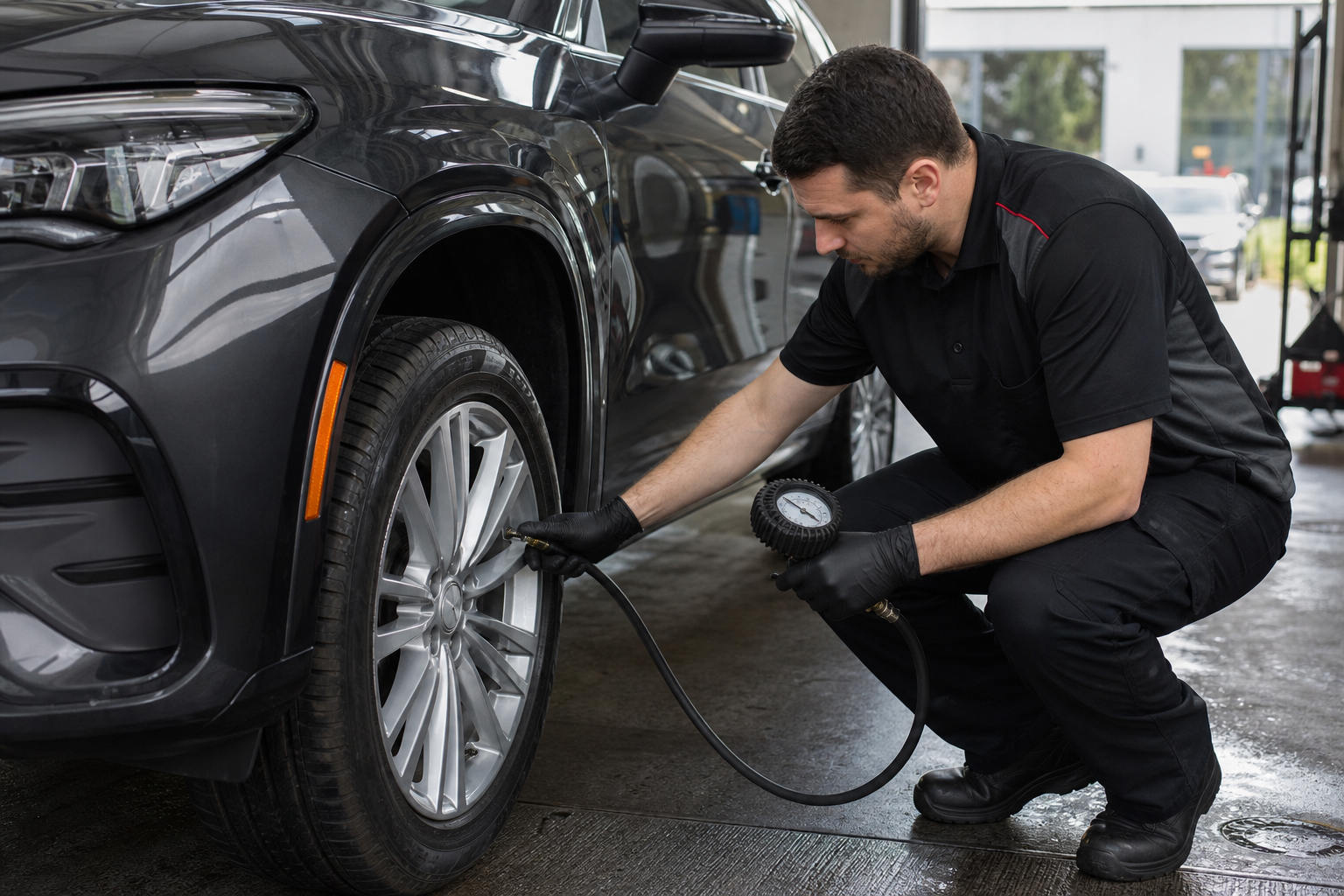
 Your vehicle’s tires should always be inflated to their proper PSI (pound per square inch), which is the standard rating for air pressure within a tire. The PSI for your vehicle’s tires is generally found on the drivers’ door jamb, inside your owner’s manual or on the tire itself. Proper tire inflation will allow you to have the best possible control of your vehicle and gives you a more comfortable ride.
For proper tire pressure and inflation:
- The pressure of your tires must be in accordance with the PSI recommended by the tire manufacturer.
- Tire pressure should be checked in the morning before you drive your car in order to get an accurate reading.
- Temperature affects tire pressure; when it is cold pressure will drop and rise when the temperature is warm.
- Use a dependable good quality tire gauge to monitor your tire pressure regularly.
- Safety: Low tire pressure will cause friction between the tire and the road. This may cause loss of control or a blow out which may lead to a serious accident.
- Comfort: High tire pressure will make the ride feel harder and bouncier because less of the tire is touching the road. The traction and stopping distance will be affected.
- Longevity: Tires will experience uneven tire wear and your tires will need to be replaced sooner than usual.
- Fuel Efficiency: Gas mileage will decrease when tire pressure is not inflated to the correct pressure.
Tags
Tires
FM
Faisal Mohammad
Licensed Automotive Service Technician · 22 years' experience
Faisal Mohammad is a licensed Automotive Service Technician with 22 years of hands-on experience in the automotive industry. He has built, repaired, and serviced thousands of vehicles across tires, wheels, brakes, suspension, and diagnostics, and reviews the tire and automotive guides published by Limitless Tire for technical accuracy.